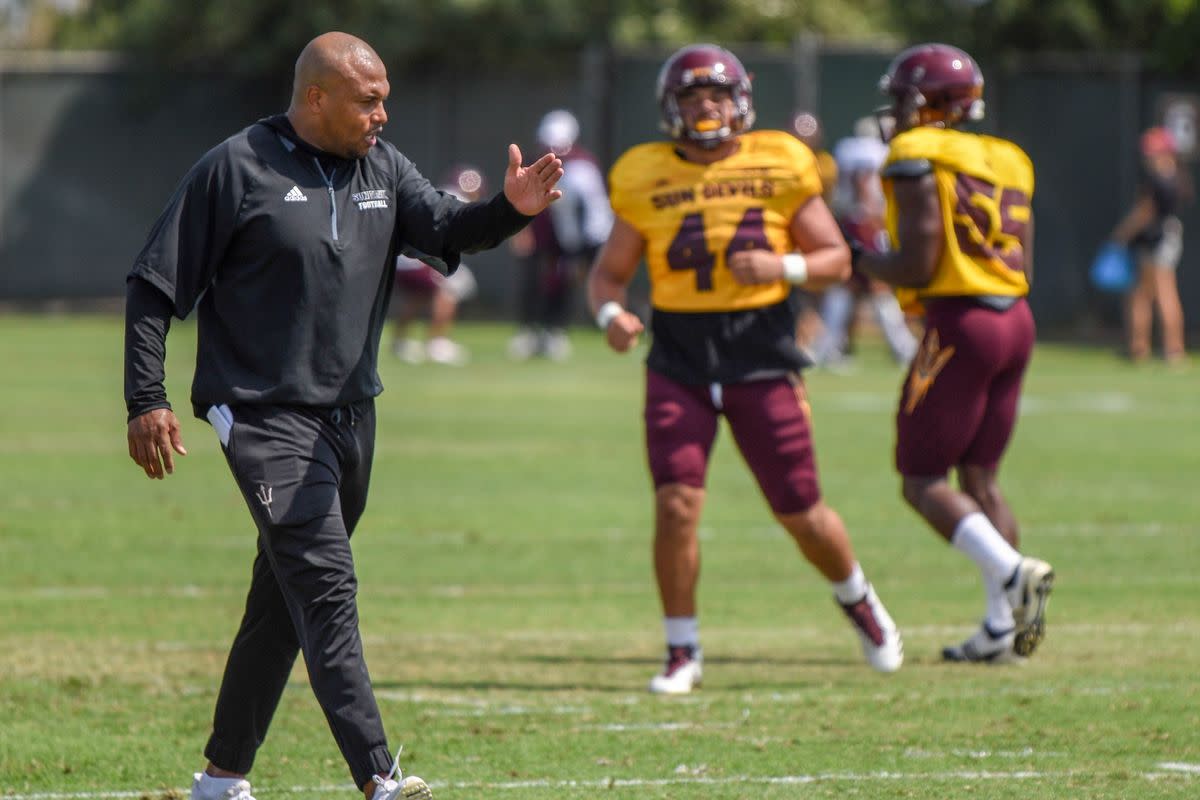
Oh really, UCF?

Advertisement
Because Manny couldn’t see he was getting played by Gus and T-will. He was never going to be the sole DC. Everything has moved too fast. Manny got played. Like I said, Manny looks bad because he is getting schooled, once again, by more experienced coaches. I love the guy, but he’s going to have to make his mind up quick and stand his ground. Or we will never get to big time status with him at the helm.
Dawg..this makes no sense..htf did “manny get played” in this situation?? Dude left for a title and more money. That’s it. Twill didn’t need “LB coach at The U for a week and a half” on his resume for him to get this call. He and Gus have history. Your acting like parlayed the linebacker job at Miami into a DC job..Clearly that’s not the case
 
So you think Diaz should have countered UCFs 600k to be their co-DC by making Williams the highest paid LB coach in the country a couple weeks after he arrived. Now THAT would really be a ***** move, which is why it doesn't surprise me that so many porsters here are in favor of it.
You are playing chess, most of the people on here are playing checkers and will never understand the significance of your comment.
 
Here's my question: Why didnt Manny go after David Gibbs? His resume reads like someone Manny would love in the DC role.


David Gibbs joined the Mizzou Football coaching staff on Jan. 17th and will coach the Mizzou secondary. Gibbs is a 25-year veteran of the coaching industry, including 11 seasons as a defensive coordinator in the college ranks, and nine seasons as a defensive backs coach for three different NFL teams.

Gibbs comes to Mizzou after spending the last four seasons as defensive coordinator (2015-18) at Texas Tech, where his defenses became known as one of the top turnover-creating units in the country. In 2017, Tech led the Big 12 Conference and ranked sixth nationally with 29 forced turnovers on the year, including four defensive scores, which was the most by a Texas Tech defense since 2001. From 2013-17, Gibbs’ defenses at Tech and Houston forced a combined 140 turnovers, which was tied for most in the nation among any defensive coordinator during that five-year span.

Gibbs has previously served as defensive coordinator at Minnesota (1997-2000), Auburn (2005) and Houston (2013-14), and also took over as interim Head Coach for the Cougars’ appearance in the 2015 Armed Forces Bowl. In that game, Gibbs’ team posted the biggest fourth quarter comeback win in bowl game history, overcoming a 31-6 deficit with just 11 minutes remaining in the game to notch a thrilling 35-34 victory.

In his first season at the helm of the Red Raider defense, Gibbs preached the importance of forcing turnovers and the effects showed as Tech went from a minus-13 turnover margin in 2014 to plus-2 in 2015. The Red Raiders picked off 15 passes and recovered 10 fumbles in 2015, a year after forcing just 15 turnovers altogether.

Gibbs quickly changed the defensive culture at Houston shortly after his arrival prior to the 2013 season. The Cougars ranked as the third-most improved scoring defense nationally and ranked 20th in the country after allowing 21.8 points per game, a significant improvement from the 36 points per game Houston surrendered in 2012.

The 2013 Houston defense led the nation with 43 turnovers forced to help lead the Cougars to a nation’s best plus-25 turnover margin. Trevon Stewart led the nation and set a UH record with six fumble recoveries while Adrian McDonald led The American Athletic Conference with six interceptions.

The dramatic defensive overhaul under Gibbs continued in 2014 as Houston finished the regular season ranked 11th nationally in scoring defense at 19.5 points per game and 19th nationally in total defense at 334.6 yards per game. The Houston defense was fifth nationally with 30 takeaways, including 19 interceptions, a number that ranked sixth nationally.

Prior to Houston, Gibbs’ last collegiate coaching stop was in 2005 when he served as defensive coordinator at Auburn. The Tiger defense ranked sixth nationally in scoring defense, allowing just 15.5 points per game that season, while ranking 11th in sacks (39) and 16th in third-down defense.

On the professional level, Gibbs spent a combined nine seasons in Denver, Kansas City and Houston as a defensive backs coach. Teams sporting Gibbs on staff finished in the top 12 of total defense five times and advanced to the NFL Playoffs on three occasions. Three players under Gibbs earned NFL Pro Bowl selections in Champ Bailey, John Lynch and Deltha O’Neal.

Gibbs received his NFL start in 2001 with Denver where in his first year, the Broncos defense ranked sixth in the league for interceptions and ninth in total defense. In 2002, the defense improved to sixth in total defense and third in passing touchdowns allowed. The following two years saw Denver advance to the playoffs as the Broncos ranked fourth in the NFL in total defense both seasons. Both years also saw the squad finish sixth in passing defense and in the top 10 of scoring defense.

Following his one season at Auburn, Gibbs returned to the NFL in 2006 as a defensive backs coach with the Kansas City Chiefs. Gibbs spent three seasons with the Chiefs, assisting with a Kansas City defense that improved from 25th in total defense the year prior to his arrival to 12th overall. In 2007, the Chiefs improved to fifth in the league in passing defense while ranking fourth in passing touchdowns allowed.

The Chiefs allowed just one 300-yard passer in each of his first two seasons in Kansas City. After helping the 2008 Kansas City defense to finish ninth in turnovers forced, Gibbs moved to Houston where the Texans’ pass defense improved seven spots to 10th in the league in passing defense in his first year.

Prior to joining the professional ranks, Gibbs became the youngest coordinator on the FBS level at the time as the then 29-year old took over as a defensive coordinator at Minnesota in 1997. Gibbs improved a Minnesota defense that had ranked last in the Big Ten in 1996 to one that was ranked eighth in the nation in pass efficiency defense and scoring defense by 1999. His defense helped lead the Golden Gophers to back-to-back bowl games in 1999 and 2000.

Under Gibbs’ tutelage, Tyrone Carter won the 1999 Jim Thorpe Award and back-to-back All-America honors in 1998 and 1999. Defensive end Lamanzer Williams earned All-American honors in 1997 as Gibbs’ defense produced an All-American in three-straight seasons for the first time at Minnesota since 1961-63. In addition, defensive end Karon Riley was named the Big Ten Defensive Lineman of the Year in 2000. Under Gibbs, six Minnesota defensive players earned first team All-Big Ten honors while six more earned second team honors.

Gibbs earned his first full-time coaching position in 1995 at the University of Kansas, where he coached the program’s defensive backs. The Jayhawks advanced to just their eighth bowl game in program history in Gibbs’ first year where they defeated UCLA in the Aloha Bowl. Defensive back Dorian Brew earned All-Big Eight honors in Gibbs’ first season while Tony Blevins and Jason Harris each earned All-Big 12 honors under Gibbs.

Gibbs earned his first coaching opportunity with back-to-back two-year stints as a graduate assistant at both Colorado and Oklahoma. Oklahoma won the 1991 Gator Bowl while Colorado collected wins in the 1993 Aloha Bowl and 1994 Fiesta Bowl with Gibbs on staff.

The Auburn, Ala., native was a four-year letterman at the University of Colorado from 1987-90. He started at defensive back for the 1990 national-title winning Colorado team and the 11-1 1989 team that finished fourth nationally in the final polls. Gibbs graduated from Colorado in 1990, earning Academic All-Big Eight honors as a senior.

Gibbs and his wife, Debbie, are the parents of two children – a son, Hudson, and a daughter, Charlie Grace.

For all the latest on Mizzou Football, stay tuned to www.MUTigers.com and follow the team on Twitter (@MizzouFootball) and like the team on Facebook and Instagram.
 
Here's my question: Why didnt Manny go after David Gibbs? His resume reads like someone Manny would love in the DC role.


David Gibbs joined the Mizzou Football coaching staff on Jan. 17th and will coach the Mizzou secondary. Gibbs is a 25-year veteran of the coaching industry, including 11 seasons as a defensive coordinator in the college ranks, and nine seasons as a defensive backs coach for three different NFL teams.

Gibbs comes to Mizzou after spending the last four seasons as defensive coordinator (2015-18) at Texas Tech, where his defenses became known as one of the top turnover-creating units in the country. In 2017, Tech led the Big 12 Conference and ranked sixth nationally with 29 forced turnovers on the year, including four defensive scores, which was the most by a Texas Tech defense since 2001. From 2013-17, Gibbs’ defenses at Tech and Houston forced a combined 140 turnovers, which was tied for most in the nation among any defensive coordinator during that five-year span.

Gibbs has previously served as defensive coordinator at Minnesota (1997-2000), Auburn (2005) and Houston (2013-14), and also took over as interim Head Coach for the Cougars’ appearance in the 2015 Armed Forces Bowl. In that game, Gibbs’ team posted the biggest fourth quarter comeback win in bowl game history, overcoming a 31-6 deficit with just 11 minutes remaining in the game to notch a thrilling 35-34 victory.

In his first season at the helm of the Red Raider defense, Gibbs preached the importance of forcing turnovers and the effects showed as Tech went from a minus-13 turnover margin in 2014 to plus-2 in 2015. The Red Raiders picked off 15 passes and recovered 10 fumbles in 2015, a year after forcing just 15 turnovers altogether.

Gibbs quickly changed the defensive culture at Houston shortly after his arrival prior to the 2013 season. The Cougars ranked as the third-most improved scoring defense nationally and ranked 20th in the country after allowing 21.8 points per game, a significant improvement from the 36 points per game Houston surrendered in 2012.

The 2013 Houston defense led the nation with 43 turnovers forced to help lead the Cougars to a nation’s best plus-25 turnover margin. Trevon Stewart led the nation and set a UH record with six fumble recoveries while Adrian McDonald led The American Athletic Conference with six interceptions.

The dramatic defensive overhaul under Gibbs continued in 2014 as Houston finished the regular season ranked 11th nationally in scoring defense at 19.5 points per game and 19th nationally in total defense at 334.6 yards per game. The Houston defense was fifth nationally with 30 takeaways, including 19 interceptions, a number that ranked sixth nationally.

Prior to Houston, Gibbs’ last collegiate coaching stop was in 2005 when he served as defensive coordinator at Auburn. The Tiger defense ranked sixth nationally in scoring defense, allowing just 15.5 points per game that season, while ranking 11th in sacks (39) and 16th in third-down defense.

On the professional level, Gibbs spent a combined nine seasons in Denver, Kansas City and Houston as a defensive backs coach. Teams sporting Gibbs on staff finished in the top 12 of total defense five times and advanced to the NFL Playoffs on three occasions. Three players under Gibbs earned NFL Pro Bowl selections in Champ Bailey, John Lynch and Deltha O’Neal.

Gibbs received his NFL start in 2001 with Denver where in his first year, the Broncos defense ranked sixth in the league for interceptions and ninth in total defense. In 2002, the defense improved to sixth in total defense and third in passing touchdowns allowed. The following two years saw Denver advance to the playoffs as the Broncos ranked fourth in the NFL in total defense both seasons. Both years also saw the squad finish sixth in passing defense and in the top 10 of scoring defense.

Following his one season at Auburn, Gibbs returned to the NFL in 2006 as a defensive backs coach with the Kansas City Chiefs. Gibbs spent three seasons with the Chiefs, assisting with a Kansas City defense that improved from 25th in total defense the year prior to his arrival to 12th overall. In 2007, the Chiefs improved to fifth in the league in passing defense while ranking fourth in passing touchdowns allowed.

The Chiefs allowed just one 300-yard passer in each of his first two seasons in Kansas City. After helping the 2008 Kansas City defense to finish ninth in turnovers forced, Gibbs moved to Houston where the Texans’ pass defense improved seven spots to 10th in the league in passing defense in his first year.

Prior to joining the professional ranks, Gibbs became the youngest coordinator on the FBS level at the time as the then 29-year old took over as a defensive coordinator at Minnesota in 1997. Gibbs improved a Minnesota defense that had ranked last in the Big Ten in 1996 to one that was ranked eighth in the nation in pass efficiency defense and scoring defense by 1999. His defense helped lead the Golden Gophers to back-to-back bowl games in 1999 and 2000.

Under Gibbs’ tutelage, Tyrone Carter won the 1999 Jim Thorpe Award and back-to-back All-America honors in 1998 and 1999. Defensive end Lamanzer Williams earned All-American honors in 1997 as Gibbs’ defense produced an All-American in three-straight seasons for the first time at Minnesota since 1961-63. In addition, defensive end Karon Riley was named the Big Ten Defensive Lineman of the Year in 2000. Under Gibbs, six Minnesota defensive players earned first team All-Big Ten honors while six more earned second team honors.

Gibbs earned his first full-time coaching position in 1995 at the University of Kansas, where he coached the program’s defensive backs. The Jayhawks advanced to just their eighth bowl game in program history in Gibbs’ first year where they defeated UCLA in the Aloha Bowl. Defensive back Dorian Brew earned All-Big Eight honors in Gibbs’ first season while Tony Blevins and Jason Harris each earned All-Big 12 honors under Gibbs.

Gibbs earned his first coaching opportunity with back-to-back two-year stints as a graduate assistant at both Colorado and Oklahoma. Oklahoma won the 1991 Gator Bowl while Colorado collected wins in the 1993 Aloha Bowl and 1994 Fiesta Bowl with Gibbs on staff.

The Auburn, Ala., native was a four-year letterman at the University of Colorado from 1987-90. He started at defensive back for the 1990 national-title winning Colorado team and the 11-1 1989 team that finished fourth nationally in the final polls. Gibbs graduated from Colorado in 1990, earning Academic All-Big Eight honors as a senior.

Gibbs and his wife, Debbie, are the parents of two children – a son, Hudson, and a daughter, Charlie Grace.

For all the latest on Mizzou Football, stay tuned to www.MUTigers.com and follow the team on Twitter (@MizzouFootball) and like the team on Facebook and Instagram.
Plot twist......Manny waits until Gibbs has been at UCF for about a month and then offers him the DC gig and a raise.
 
Advertisement
Dawg..this makes no sense..htf did “manny get played” in this situation?? Dude left for a title and more money. That’s it. Twill didn’t need “LB coach at The U for a week and a half” on his resume for him to get this call. He and Gus have history. Your acting like parlayed the linebacker job at Miami into a DC job..Clearly that’s not the case
This isn’t about what T-will did. It’s about what Gus did to Manny. That’s my only point.
 
This isn’t about what T-will did. It’s about what Gus did to Manny. That’s my only point.
1613701646232.gif

Maybe I missed sum..exactly what did Gus do to manny again?
 
This is silly. Manny has open positions at co dc or dc and could have offered twill either if he valued him that much. Twill went to G5 to get a job Manny didn't want him for. Apparently twill's only real value to Manny is as recruiter. Diaz could have kept him and chose not to. If Twill didn't tell Manny he was going to ucf to take a co dc position and let Diaz try to keep him then it's his loss. Nowhere in this did Manny get played. If anything it looks like Twill played himself.
 
Advertisement
LOL. Where are all the "he had to take this promotion" assh0les? I knew this was coming. UM lost a PC to be a PC at a G5 program. Sad.
he got a DC title and a 600k salary. only one LB coach made over 600 last year. Um didnt lost **** to anyone. they didnt want to match a ridiculous salary for a LB coach (nor should they). continue on with the bull**** you do since you live in misery
 
600 would’ve had him as tied for second highest LB coach in 2020... for reference he was getting 450 at Auburn and top 10 for LB coach salary in NCAA according to footballscoop

if u go look at what they have for 2019 600 would have him at the 4th highest that year.


I don’t think matching at 600 would’ve kept him. But I also don’t think it would’ve been a ***** move. He would’ve gone from number 10 highest paid to number 3 highest paid in a year he switched jobs which is typically when people get substantial pay bumps

2020 numbers


Paying him more than 600k would make him at least the #2 highest paid and if more than 625k, THE highest paid. And I doubt any counter offer to a 600k salary would be for $600,001 so he'd be asking for #1 or #2 money as a LB coach to match UCFs offer as a DC. Should he get a top 10 LB coach salary? Sure. I don't have an issue with that. Should Diaz have made him the highest paid LB in the country two weeks after hiring him? That's a hard no and would have been a ***** move.

And the irony is that if news came out that Miami countered UCFs offer and actually did make Williams the highest paid LB coach in the country, the mongoloids on this website would be mocking Diaz for panicking and then claim that it proves that the only way Miami is able to retain position coaches is to vastly overpay them.
 
Back
Top