Highlights:
A college football sign stealer agreed to speak with The Athletic about the Michigan situation and the process of sign stealing, in general, under the cloak of anonymity. This guy is a coach who works at a Power 5 program that does not play Michigan. While contributing commentary about the situation, he did not give up all his "secrets".
-
It's not illegal to steal signs. In fact, the practice is legal and has been well documented in the past. Stalions’ breaking NCAA rules by
purchasing tickets to games and allegedly sending people to film future opponents has brought intense new attention.
- He stated that his biggest surprise is how people don't seem to notice what is going on their own sidelines every Saturday.
-
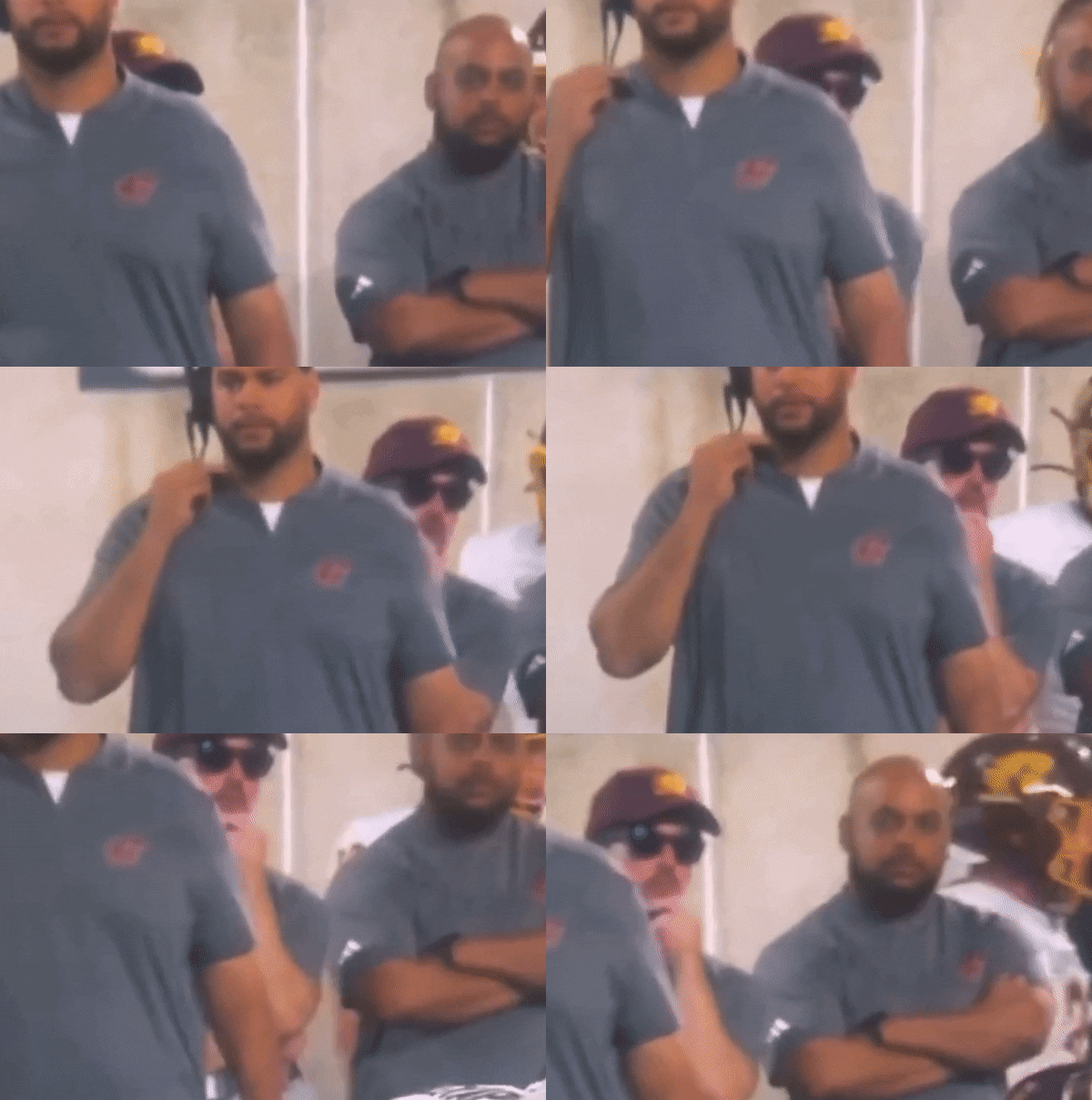
He also says "your favorite team is doing it too". During a game, it’s relatively easy to spot the staffer who has that particular set of skills if you’re looking for them. Some might be sitting up in the coaches’ box taking notes, but most are standing close to the action. It’s no secret what they’re trying to do.
-
All you need is tape. If you spend enough time studying your opponents with a combination of TV broadcast tape and game tape, you’ll find patterns. The process of carefully watching signalers and logging everything he sees is time- and labor-intensive. It’s not easy to watch tape without sound and crack these codes. But it does tend to pay off.
He does not believe Michigan’s alleged scheme is commonplace, calling it “next-level s—” that crosses the line.
He also pushes back on the title of "savant" bestowed on Stalions by the media. He insists it's not that difficult for the average person to pick up the skill.
“I promise you, within a day, I could take the average fan and watch three TV copies with them and they’ll know signals by the end of it,” he said. “We’re trying to signal in a play that a college kid has to comprehend. This isn’t rocket science. The signals are not ridiculously tough to figure out.”
-
Results of sign stealing are NOT guaranteed. He points out that after all the weekly work of studying the tape and decoding your opponent's signals, you could be on the sideline of the game and realize they've changed all the signs. All that work is for nothing. The key is to find tendencies. When he watches tape, he’s always hoping to see repeated patterns of signals and plays over multiple games. But some games might require 10 signals, and others might only require five. He has to track week-to-week differences.
If you know your opponent just signaled for a pass, that’s great. You still need to execute a simple signal that effectively conveys the intel to the defense as fast as possible. And you still won't necessarily know where the ball is going.
-
Don't get "GOT" - How do you know if you're "getting got?" When players come off the field and tell coaches that the opponent is calling out where the runs are going or identifying passes. An especially easy tell is when defenses know the signal for screen passes and easily stop them.
-
If you "get got" you'd better change it up - He notes that if a coaching staff is invested in stealing opponents signs, they need to have a plan to prevent sign stealing. Using wristbands is a good way.
“Teams that use wristbands don’t have anything to worry about,"
He goes on to say that there are more subtle ways to obfuscate and avoid asking players to learn new signals, like changing the order, pattern and delivery of the sideline signalers or introducing different dummy signals. Sharp signal stealers can still figure out how to crack the new codes, but it takes time and repetition to do that live.
“As a signal stealing person myself, if you don’t want me to get all your stuff off TV copy, change your signals,” “If you’re not gonna change your signals, we’re gonna have your signals. Because I’ll put in the work to make sure we get your signals.”
-
If you don't change, that's on you - This guy didn't name anyone, but he said there were certain coaches who didn't change their signals even after rival teams got them. He pointed out that this is only hurting your team.
He also pointed out that some coaches are brazen enough to think they don't need to change their signs. He used Deion Sanders' comments about the Michigan situation as an example. When asked about Michigan on Tuesday, Colorado coach Deion Sanders told reporters he didn’t fully buy into the idea that sign stealing impacts the outcome of physical football games. “You can have someone’s whole game plan. They could mail it to you. You’ve still got to stop it,” were his words.
“I hope we play
Colorado,” the sign stealer said. “Don’t ever change your signals or your signaler and let’s see if it’s just players beat players.”
This coach also pointed out that coaching circles are very gossipy. He claims that his team's coaching staff had heard rumors of Michigan filming signals well before the story broke publicly. He pointed out that any Big 10 staff who had an awareness of Michigan stealing signs and didn't adjust accordingly just did their team a serious injustice. “It’s on you to change your signals.”
-Opponents know if you are good at sign stealing - Signal stealers study enough tape to know who the other signal stealers are. They see things and they definitely hear things about other programs’ sign-stealing operations. You don’t want a reputation for being great at signal stealing. If your foes know that, they’ll make the task tougher. The good ones need to be careful.
-
If done right, it DOES change games - If you have good enough players and good enough information, you can do damage to the teams that don’t change signals
“I guess the best way to say it is: sign stealing, if you have the material, can be very, very effective and win you a lot of games,” “If you go to these (opponents’) games and do it, yeah, that’s obviously gonna have much more of an impact, because you’ll have more tape to go off. "
He is quick to also point out that game day could come and the opponent whose signals you "stole" could have changed them up for that game.
In terms of the Michigan situation and their wins and losses, ow many outcomes were impacted? How many losses became wins thanks to impermissibly obtained intel?
“It’s a really hard question,” the sign stealer said.
-
Should there be rule changes? No thanks says the sign stealer. If a college football staff is gifted at stealing signals, they’re certainly not going to advocate for advancements that cost them their hard-earned edge going into games.
For staffers who are good at doing this as part of their job, they aren't going to lose those jobs. They all perform other coaching or recruiting duties under their official job titles and capacities. Stealing signals is just their in-season side hustle. But getting good at it does make them more valuable.
The sign stealer who was interviewed for this article isn't worried. He predicts that even if technology is introduced next season, offenses that want to go fast tempo will still have to use hand signals at some point. He's been doing it long enough to know that the good ones will find a way to crack whatever comes next.


 theathletic.com