Off-Topic Stock Market & Crypto Discussion

I don’t believe a recession is priced in at all. What has been priced in would be Fed getting to 5ish, pausing, then doing QE. That could cause a mild recession and it could knock inflation down but inflation will continue to bounce back with any QE until we get a few more years down the road. my opinion.

I could easily see going back down to the mid 3000's, and lower if the Fed has to go to 6%
 
Advertisement
I just believe that 2% inflation will not happen without causing a lot of pain. By letting our economy thrive, competition will bring prices down, with supply catching up with demand. We are now seeing food, energy and housing dropping in price.

My earlier point about housing:

 
I could easily see going back down to the mid 3000's, and lower if the Fed has to go to 6%

Heck, I think we hit the mid-3000s if May has a .25 hike with core cpi still high. If we hit 6%, I think we go much lower.

@mr.h , didn’t the FED already say a ton of pain is coming? Have we really seen any real pain?

core cpi to 2% or
Unemployment jumps or
Something breaks or
The FED has zero credibility

Im going with something breaks
 
Heck, I think we hit the mid-3000s if May has a .25 hike with core cpi still high. If we hit 6%, I think we go much lower.

@mr.h , didn’t the FED already say a ton of pain is coming? Have we really seen any real pain?

core cpi to 2% or
Unemployment jumps or
Something breaks or
The FED has zero credibility

Im going with something breaks
Yes, the Fed said we will have real pain, but is it necessary? January was a strong month and they should wait and see what happens in February. Earnings are already pointing to a recession and interest rates are rising. Walmart and Home Depot are both saying consumers are looking for lower prices, and they believe demand will drop. The Fed already stated that inflation has peaked and that we are in a deflationary cycle. [the fed has zero cred]
 
Last edited:
Yes, the Fed said we will have real pain, but is it necessary? January was a strong month and they should wait and see what happens in February. Earnings are already pointing to a recession and interest rates are rising. Walmart and Home Depot are both saying consumers are looking for lower prices, and they believe demand will drop. The Fed already stated that inflation has peaked and that we are in a deflationary cycle. [the fed has zero cred]

He said "disinflation" which is very different than deflationary, and the recent data has actually been inflationary.
 
Advertisement
He said "disinflation" which is very different than deflationary, and the recent data has actually been inflationary.
You are right, but January was exceptionally strong, coming off a weak December, especially job numbers, and would like to see February numbers before making rate hike decisions. January felt like a Christmas rally and the job numbers may be temporary. Companies are projecting weakness ahead.
 
You are right, but January was exceptionally strong, coming off a weak December, especially job numbers, and would like to see February numbers before making rate hike decisions. January felt like a Christmas rally and the job numbers may be temporary. Companies are projecting weakness ahead.

Consider, for example, some stubbornly strong economic activity data. S&P Global said on Tuesday that its U.S. composite purchasing managers' index rose to 50.2 in February, an eight-month high. Economic activity was also strong across the Atlantic: The Eurozone's composite output index rose to 52.4, implying a faster pace of expansion than January. While the Euro Stoxx 50 index has outperformed the S&P 500 in dollar terms since the eve of Russia's invasion of Ukraine, Heard's Stephen Wilmot points out that the going may get harder as European investors likely shift their attention to interest rates.
 
Consider, for example, some stubbornly strong economic activity data. S&P Global said on Tuesday that its U.S. composite purchasing managers' index rose to 50.2 in February, an eight-month high. Economic activity was also strong across the Atlantic: The Eurozone's composite output index rose to 52.4, implying a faster pace of expansion than January. While the Euro Stoxx 50 index has outperformed the S&P 500 in dollar terms since the eve of Russia's invasion of Ukraine, Heard's Stephen Wilmot points out that the going may get harder as European investors likely shift their attention to interest rates.
Yes…Europe and especially England have it worse than we do. We will see.
 
Advertisement
For all of the news about housing sales being down, PRICES are still rising albeit at a slower pace. Used car prices are back up, food is still rising, wages are still rising, etc etc.

At January’s sales pace, it would take 2.9 months to exhaust the current inventory of existing homes up from 1.6 months a year ago. A four-to-seven-month supply is viewed as a healthy balance between supply and demand.

 
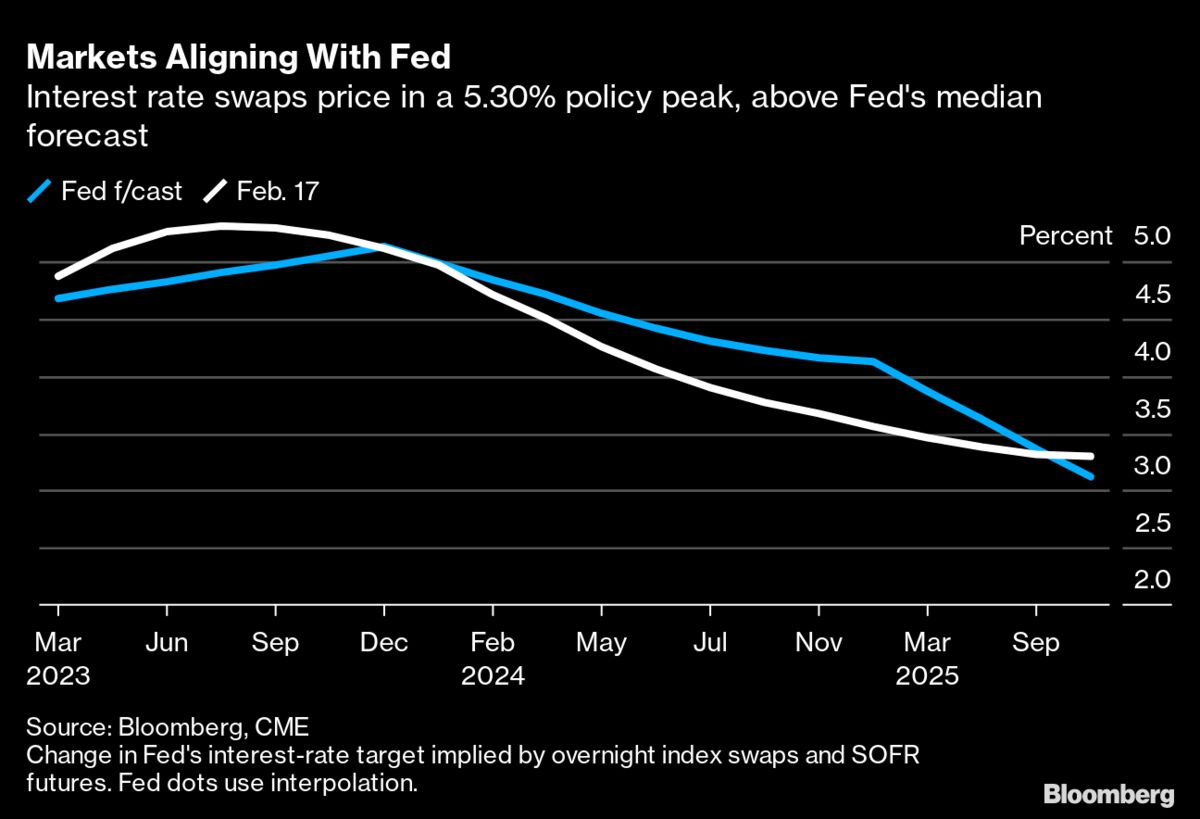
With multiple FOMC members talking about .5, I wouldn't be shocked to see it in March. At a minimum, we are looking at .5 over the next 3 months and a chance at .75-1 if CORE CPI remains near it's current rate. Stocks normally don't bottom until after a few rate decreases from the FED so we are still many months away from the bottom.
 
With multiple FOMC members talking about .5, I wouldn't be shocked to see it in March. At a minimum, we are looking at .5 over the next 3 months and a chance at .75-1 if CORE CPI remains near it's current rate. Stocks normally don't bottom until after a few rate decreases from the FED so we are still many months away from the bottom.

Dont think the Fed will be pausing any time soon, from Reuters (the EV tax credits are corporate welfare, which stoke heavy inflation):

Toyota’s Big Raise

Toyota has agreed to give its unionized workers in Japan their biggest raise in 20 years. Honda followed suit within hours, and other big Japanese employers are expected to do the same. Japanese employers face growing political and social pressure to raise stagnant wages as inflation runs hot.

It won’t be long before the Detroit automakers start talks with the United Auto Workers union to determine wages for the coming years. Those talks will set a benchmark for Toyota and others building vehicles in the United States.
 
Fed minutes:

"Participants concurred that the Federal Open Market Committee had made significant progress over the past year in moving toward a sufficiently restrictive stance of monetary policy," the minutes said.
"Even so, participants agreed that, while there were signs that the cumulative effect of the Committee's tightening of the stance of monetary policy had begun to moderate inflationary pressures, inflation remained well above the Committee's longer-run goal of 2% and the labor market remained very tight."
Discussions also reflected that most members favored the smaller 0.25% increase delivered during the latest policy decision but some in the group preferred raising rates by 50 basis points.

Cleveland Fed President Loretta Mester admitted in a speech last week she would have favored the more sizable hike but officials did not want to surprise the markets, which were pricing in 0.25%.
"The worst of inflation may be in the rear view but it remains well above the Fed’s target," Mike Loewengart, head of model portfolio construction at Morgan Stanley's Global Investment Office said in a note. "Bottom line is that many market headwinds aren’t going away and investors should expect volatility to stay as they parse over the impact rates being higher for longer will have."

Maybe this is why we held on today?
 
Last edited:
Back
Top