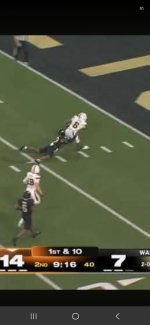
Despite all the speculation here, it is possible in hyperextension injuries to just sustain a grade one sprain. It won't be certain until he has an MRI. Im hoping he gets lucky.
Rematch the replay it doesn't look good at all.
Doc could barely straighten his leg he was in so much pain. The drawer test is a manipulation of what some call the tibial plateau and the distal femur. Rewatch the part when this happens and you will see there is no stabilization in his lower leg with the doc barely moving his lower leg. He knew instantly which was the reason for the cart.
I didn’t watch as they examined him on the field. You’re right that the medical staff knew something was up immediately, but what we see on a broadcast feed can be pretty misleading.
What the doc did on the turf was almost certainly a Lachman test (knee bent slightly at 20°–30°), which is the sideline standard for checking an ACL. The traditional Anterior Drawer requires bending the knee to 90°, which you can't realistically do with a guy in that much acute pain.
A few reasons why calling it definitively from TV is tough:
It’s about feel, not sight, the test isn’t graded by visible motion, but by the "endpoint" the doctor feels in their hands. A healthy ACL hits a sudden, solid wall; a torn one feels spongy or mushy. That tactile difference happens over just 3 to 5 millimeters, which a camera 50 feet away can't capture. Soft tissue, muscle bulk, and tape moving under the doc's hands often look like bone-on-bone instability on a 2D screen.
A hyperextension that causes a partial tear, capsule stretch, or severe bone bruise can feel loose and painful on the field, but an MRI is needed to distinguish a stretch/sprain from a complete rupture and check the meniscus.
The cart coming out definitely means the staff felt concerning laxity and shut him down to be safe. Fingers crossed the imaging comes back better than it looked.