We spend so much time on recruiting, but we rarely take time to look back. This series examines every class for the past five coaches- Manny, Richt, Golden, Shannon, and Coker. As Mario’s first class enters Year 4, what are the trends he needs to avoid if he wants to break the cycle?
Of course, bad coaching and development played a massive role in our downfall. But for this exercise, I wanted to focus on pure talent acquisition. That’s why I use NFL numbers. The NFL has the most standardized and competitive talent-evaluation process in football. It’s also really hard to get there- only 2% of CFB players and only 22% of four-stars make the league. And far fewer are able to stick around. As expected, our NFL decline mirrored our decline on the field.
Next up is a class that felt great on Signing Day, but hits a lot different two decades later: 2004.
Four-year win percentage: 61% (-10 from the class before)
Total enrollees- 24
NFL players- 3
NFL games- 263 games
Day 1 Picks- 0
Day 2 picks- 1
Pro Bowls- 6
The class ranked #3 on the Composite. I’ve listed the players in order of recruiting ranking, with NFL players in BOLD:
FIVE STARS
LB Willie Williams (Miami-Dade, FL)
WR Lance Leggett (Polk County, FL)
RB Charlie Jones (Miami-Dade, FL)
FOUR STARS
FB/LB James Bryant (Reading, PA)
RB Andrew Johnson (Pittsburgh, PA)
DE Rhyan Anderson (Racine, WI)
DT Dwayne Hendricks (South Jersey, NJ)
DE Calais Campbell (Denver, CO)
S Lovon Ponder (Miami-Dade, FL)
THREE STARS
RB Derron Thomas (New Orleans, LA)
OL Tyrone Byrd (Houston, TX)
S Anthony Reddick (Broward, FL)
DT Joe Joseph (Orlando, FL)
TE Chris Zellner (Sarasota, FL)
OL Chris Rutledge (Miami-Dade, FL)
DB Carlos Armour (Memphis, TN)
LB Romeo Davis (Miami-Dade, FL)
WR Khalil Jones (Miami-Dade, FL)
TE Cedric Hill (Valdosta, GA)
OL Josh Kerr (Cleveland, OH)
CB George Timmons (Lake City, FL)
WHAT HAPPENED: When you consider the context – three straight Top 5 teams and an elite brand– this is the worst class in Miami history. First, it was top-heavy to the extreme. Calais Campbell is a future Hall of Famer, but nobody else made any impact. Even the two other NFL players (Joe Joseph and Dwayne Hendricks) only played a single game each. Throw in the fact that this class includes Rashaun Jones (accused murderer of Bryan Pata), and I can say this is rock bottom.
The class was exciting at first. On National Signing Day, Miami won every battle. This included the number one overall player on our board, LB Willie Williams. But all three five stars missed and a fourth (RB Bobby Washington) didn’t qualify. The lack of depth is just as stunning as the failures up top: it’s hard to find ACC-average players in the group.
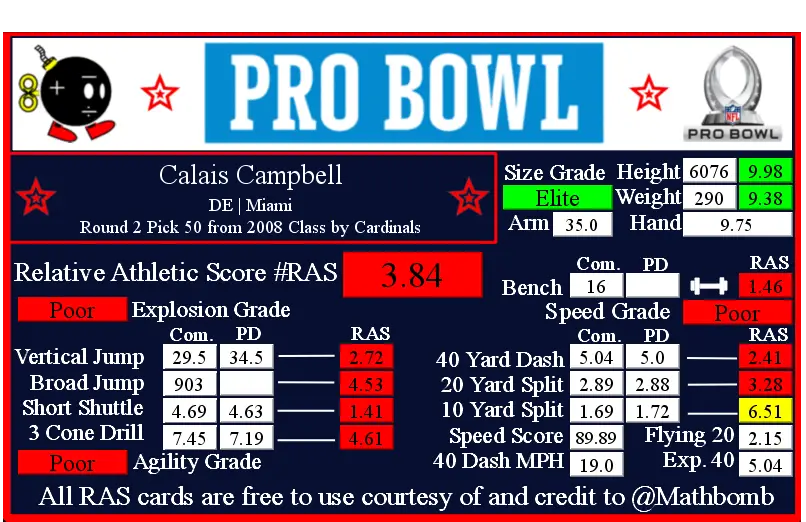
BEST PLAYER: Calais Campbell. He was a gangly, 6'8 blue-chipper out of Colorado who immediately drew comparisons to “The Mad Stork” Ted Hendricks. It took a while for Campbell’s upper-body to fill out, and he had a disappointing final year on the disastrous 2007 team. But eventually, his combination of length, motor and power came together in the pros. He should be joining Hendricks in the NFL Hall of Fame.
BIGGEST DISAPPOINTMENT: All three five stars belong in this category. At 6’2, 230 with 4.3 speed, Willie Williams was one of the best recruits in South Florida history. He was also very intelligent in the classroom. But he liked to have fun, and his Miami Herald column detailing his official visits (including three criminal complaints in Gainesville) drew national headlines. Once he got to Greentree, his “see-ball, get-ball” style clashed with the more rigid Shannon. He bounced around several colleges and struggled with off-field issues. Last I heard, he was doing well with personal training.
Lance Leggett was a 6’3 track star with an effortless running style and a slender frame. The Canes flipped him from Florida, and he was a Greentree sensation from Day 1. I remember talking him up on a practice report for Grassy.com. His deep speed allowed him to make big plays in 7on7, but once the bullets were live, his lack of play strength showed up. He is now the owner of a successful peanut company.
The ranking for Charlie Jones never really made sense. He was a tough runner with solid size but poor speed. Moreover, his production was not on the level of other five star players. He had 190 career carries at Miami and ultimately transferred to Memphis.
BEST EVALUATION: None.
LESSON LEARNED: Character counts. This class was a disaster off the field, between arrests, suspensions, probation, and worse. The culture of the program hit rock bottom with this group.
Another lesson- don’t get too cute in South Florida. Shannon was a weird South Florida evaluator, and he took kids that left local observers scratching their heads (Romeo Davis, Khalil Jones). At the same time, he allowed future impact pros to leave the area such as CB Brandon Flowers (prep school via Atlantic) and DT Pat Sims (Dillard).
CONCLUSION: Coker’s transition class had a four-year winning percentage of 88%. By his third full class, the number had dropped to 61%. That’s how quickly this program collapsed.
Of course, bad coaching and development played a massive role in our downfall. But for this exercise, I wanted to focus on pure talent acquisition. That’s why I use NFL numbers. The NFL has the most standardized and competitive talent-evaluation process in football. It’s also really hard to get there- only 2% of CFB players and only 22% of four-stars make the league. And far fewer are able to stick around. As expected, our NFL decline mirrored our decline on the field.
Next up is a class that felt great on Signing Day, but hits a lot different two decades later: 2004.
Four-year win percentage: 61% (-10 from the class before)
Total enrollees- 24
NFL players- 3
NFL games- 263 games
Day 1 Picks- 0
Day 2 picks- 1
Pro Bowls- 6
The class ranked #3 on the Composite. I’ve listed the players in order of recruiting ranking, with NFL players in BOLD:
FIVE STARS
LB Willie Williams (Miami-Dade, FL)
WR Lance Leggett (Polk County, FL)
RB Charlie Jones (Miami-Dade, FL)
FOUR STARS
FB/LB James Bryant (Reading, PA)
RB Andrew Johnson (Pittsburgh, PA)
DE Rhyan Anderson (Racine, WI)
DT Dwayne Hendricks (South Jersey, NJ)
- 1 NFL game
DE Calais Campbell (Denver, CO)
- 261 games*
- Six Pro Bowls
S Lovon Ponder (Miami-Dade, FL)
THREE STARS
RB Derron Thomas (New Orleans, LA)
OL Tyrone Byrd (Houston, TX)
S Anthony Reddick (Broward, FL)
DT Joe Joseph (Orlando, FL)
- 1 game
TE Chris Zellner (Sarasota, FL)
OL Chris Rutledge (Miami-Dade, FL)
DB Carlos Armour (Memphis, TN)
LB Romeo Davis (Miami-Dade, FL)
WR Khalil Jones (Miami-Dade, FL)
TE Cedric Hill (Valdosta, GA)
OL Josh Kerr (Cleveland, OH)
CB George Timmons (Lake City, FL)
WHAT HAPPENED: When you consider the context – three straight Top 5 teams and an elite brand– this is the worst class in Miami history. First, it was top-heavy to the extreme. Calais Campbell is a future Hall of Famer, but nobody else made any impact. Even the two other NFL players (Joe Joseph and Dwayne Hendricks) only played a single game each. Throw in the fact that this class includes Rashaun Jones (accused murderer of Bryan Pata), and I can say this is rock bottom.
The class was exciting at first. On National Signing Day, Miami won every battle. This included the number one overall player on our board, LB Willie Williams. But all three five stars missed and a fourth (RB Bobby Washington) didn’t qualify. The lack of depth is just as stunning as the failures up top: it’s hard to find ACC-average players in the group.
BEST PLAYER: Calais Campbell. He was a gangly, 6'8 blue-chipper out of Colorado who immediately drew comparisons to “The Mad Stork” Ted Hendricks. It took a while for Campbell’s upper-body to fill out, and he had a disappointing final year on the disastrous 2007 team. But eventually, his combination of length, motor and power came together in the pros. He should be joining Hendricks in the NFL Hall of Fame.
BIGGEST DISAPPOINTMENT: All three five stars belong in this category. At 6’2, 230 with 4.3 speed, Willie Williams was one of the best recruits in South Florida history. He was also very intelligent in the classroom. But he liked to have fun, and his Miami Herald column detailing his official visits (including three criminal complaints in Gainesville) drew national headlines. Once he got to Greentree, his “see-ball, get-ball” style clashed with the more rigid Shannon. He bounced around several colleges and struggled with off-field issues. Last I heard, he was doing well with personal training.
Lance Leggett was a 6’3 track star with an effortless running style and a slender frame. The Canes flipped him from Florida, and he was a Greentree sensation from Day 1. I remember talking him up on a practice report for Grassy.com. His deep speed allowed him to make big plays in 7on7, but once the bullets were live, his lack of play strength showed up. He is now the owner of a successful peanut company.
The ranking for Charlie Jones never really made sense. He was a tough runner with solid size but poor speed. Moreover, his production was not on the level of other five star players. He had 190 career carries at Miami and ultimately transferred to Memphis.
BEST EVALUATION: None.
LESSON LEARNED: Character counts. This class was a disaster off the field, between arrests, suspensions, probation, and worse. The culture of the program hit rock bottom with this group.
Another lesson- don’t get too cute in South Florida. Shannon was a weird South Florida evaluator, and he took kids that left local observers scratching their heads (Romeo Davis, Khalil Jones). At the same time, he allowed future impact pros to leave the area such as CB Brandon Flowers (prep school via Atlantic) and DT Pat Sims (Dillard).
CONCLUSION: Coker’s transition class had a four-year winning percentage of 88%. By his third full class, the number had dropped to 61%. That’s how quickly this program collapsed.